
PTH Crusher CR200
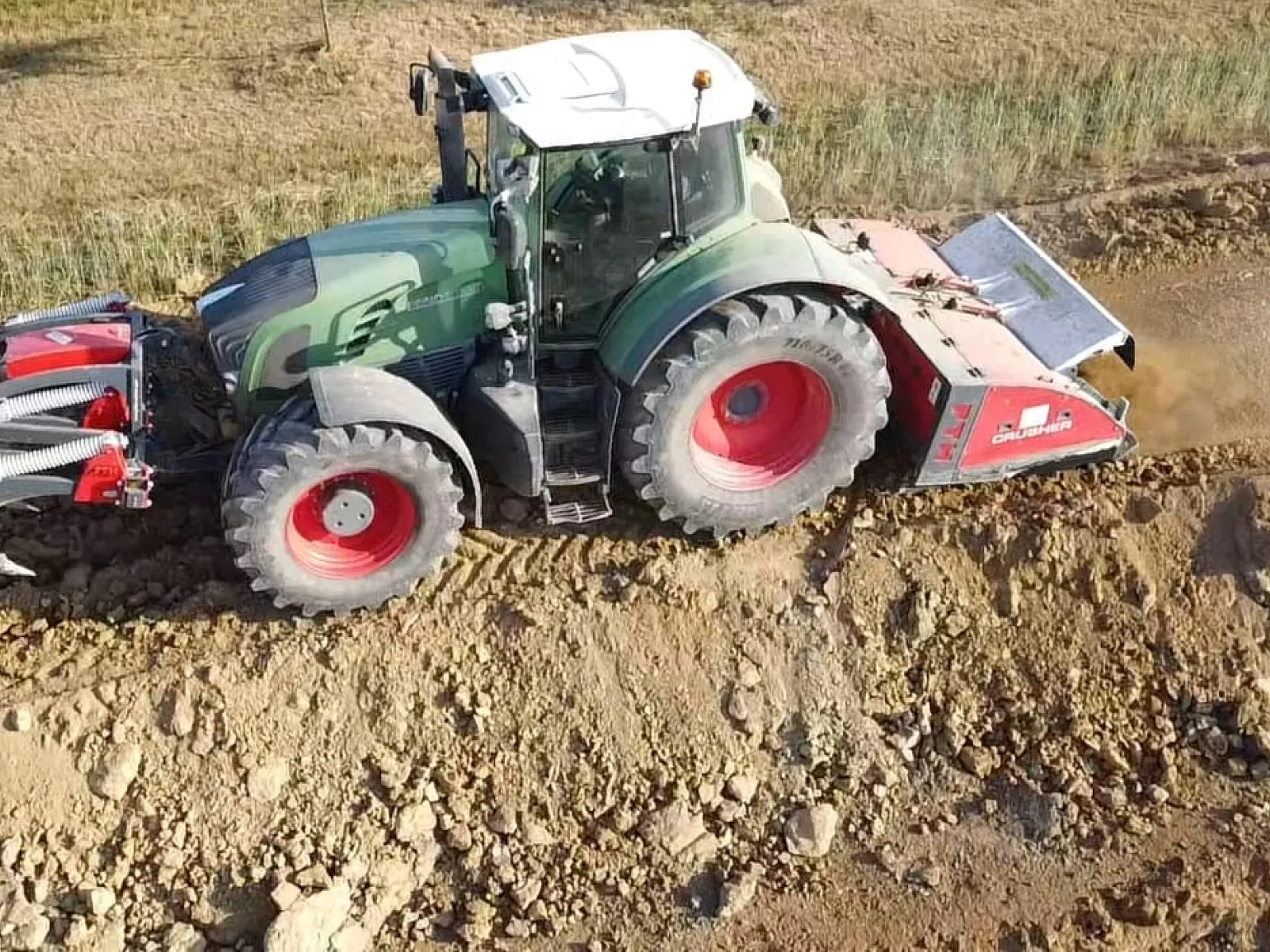
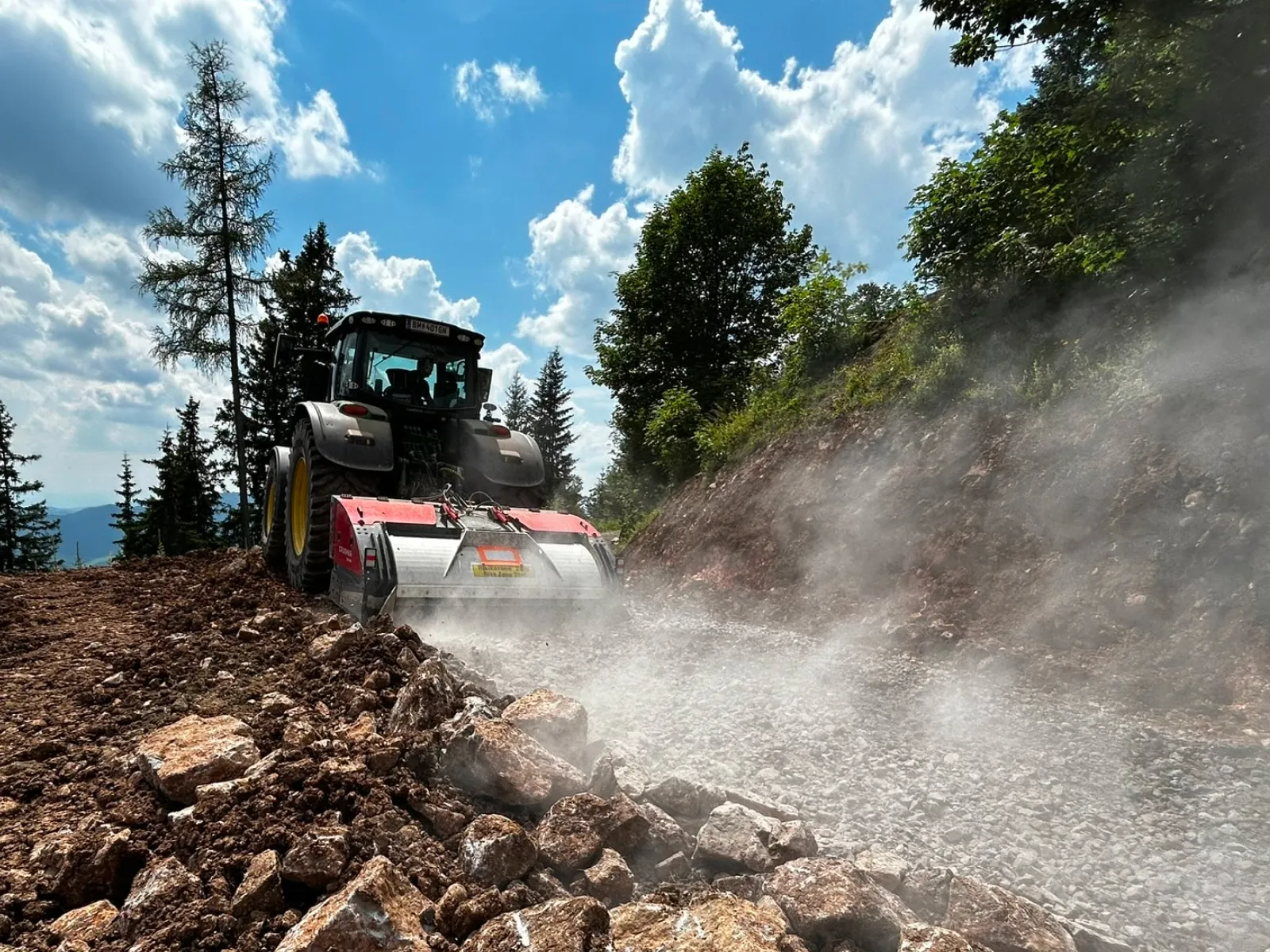
The PTH Crusher CR200 is a stone crusher for tractors of 140 to 220 hp, built for continuous work in hard rock of up to 150 N/mm². It breaks stone in place in the ground, up to 250 mm deep over a 2,000 mm working width.
- For tractors of 140 to 220 hp, on Category 3 three-point mounting
- 2,000 mm working width, up to 250 mm deep
- Rock up to 150 N/mm²; pieces up to 500 mm crushed as fine as 20 mm, depending on equipment
- Theoretical throughput of up to 450 m³/h
- Wear parts bolted on, so they can be changed on site
Technical data
| Power required | 140–220 hp |
|---|---|
| PTO speed | 540, 750 or 1,000 rpm |
| Drive | Both sides, 5 high-performance V-belts each |
| Tools | 24 |
| Dead weight | Approx. 3,800 kg |
| Rotor width | 1,500 mm |
| Working width | 2,000 mm |
| Total width | 2,100 mm |
| Working depth | Max. 250 mm |
| Throughput (theoretical) | Up to 450 m³/h |
| Crushing stage | Hydraulically adjustable, 10–70 mm |
| Inner armour | 15 mm Hardox, replaceable |
| Mounting | Three-point, Category 3 |
Overview
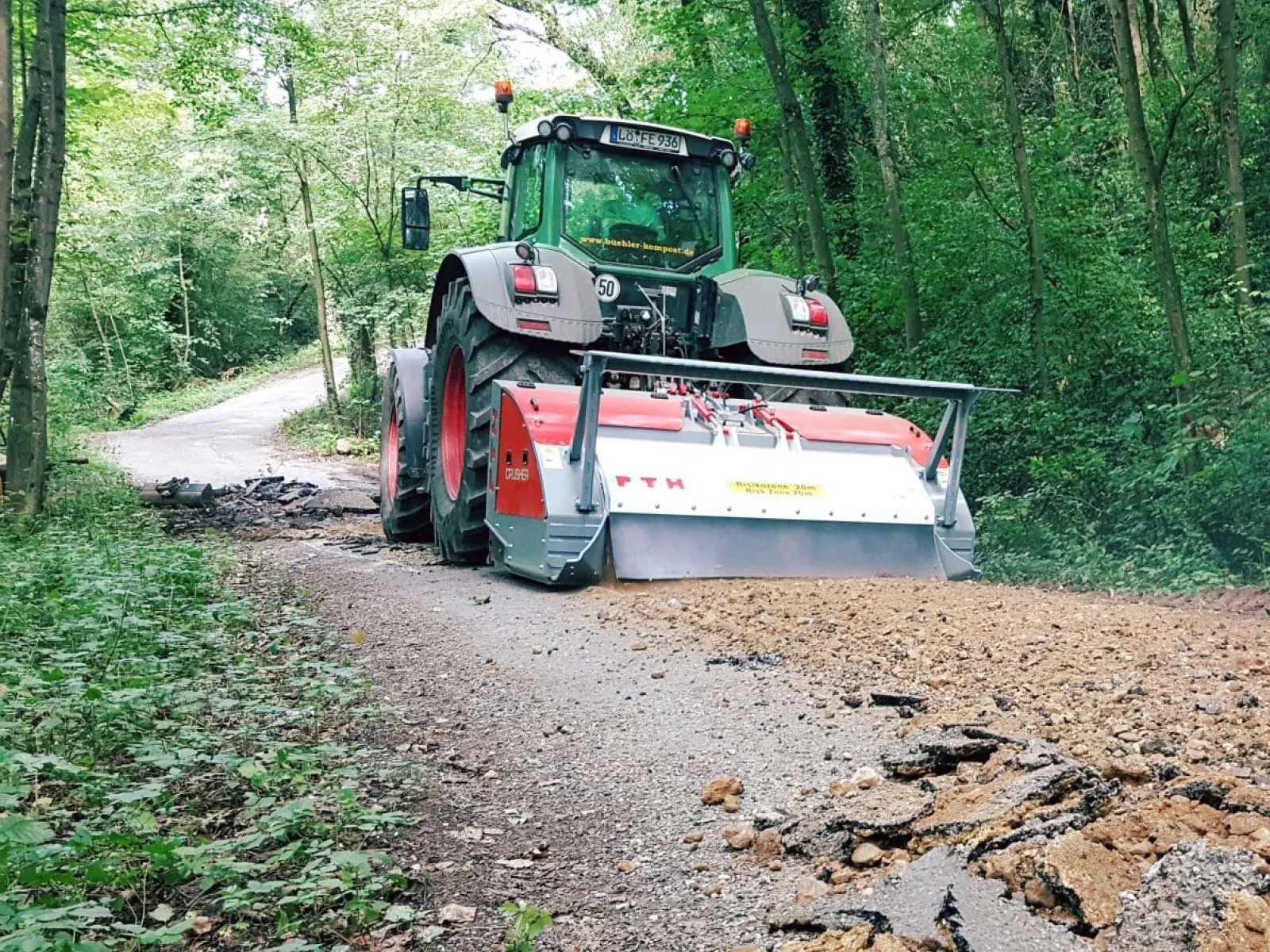
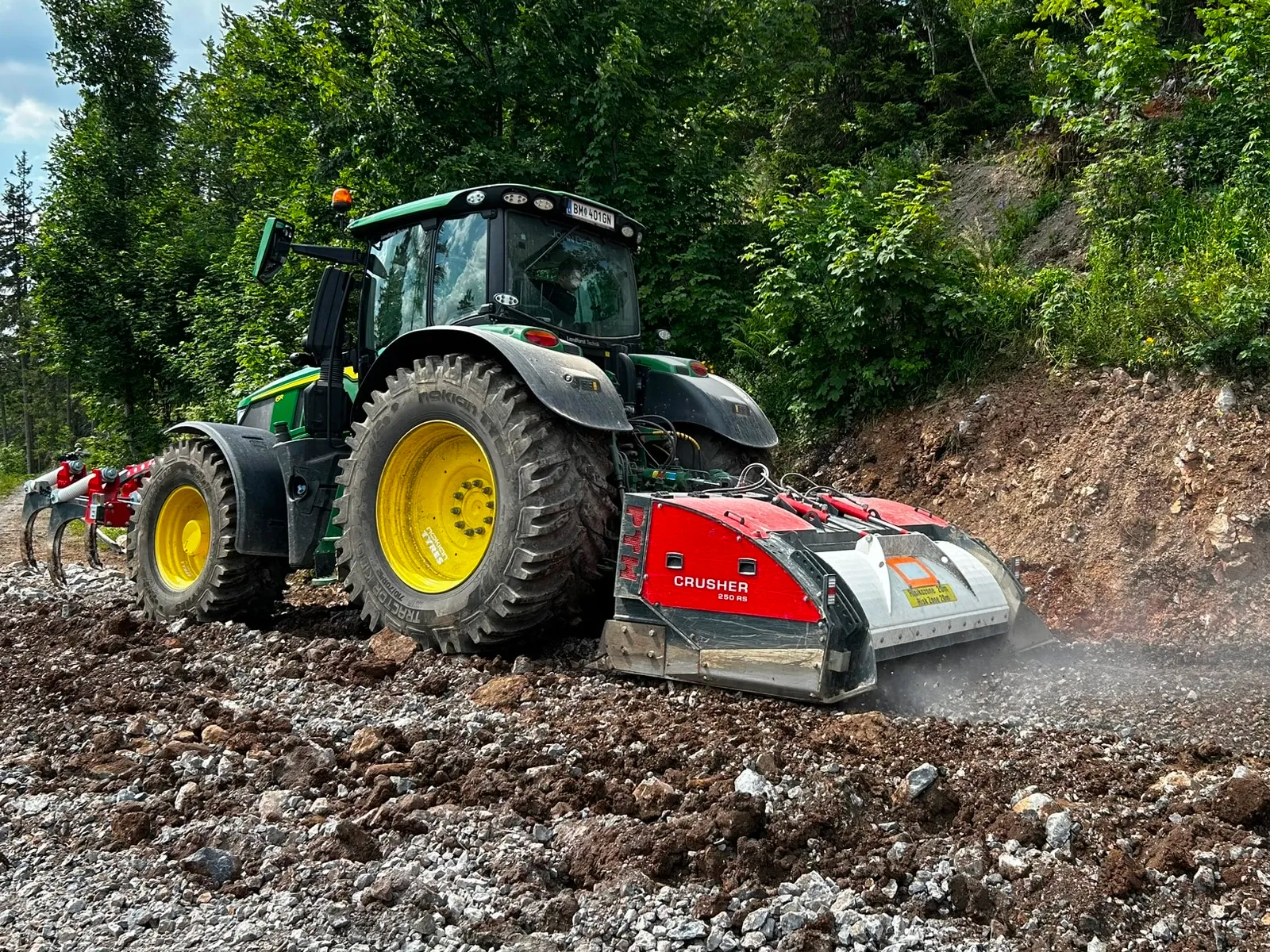
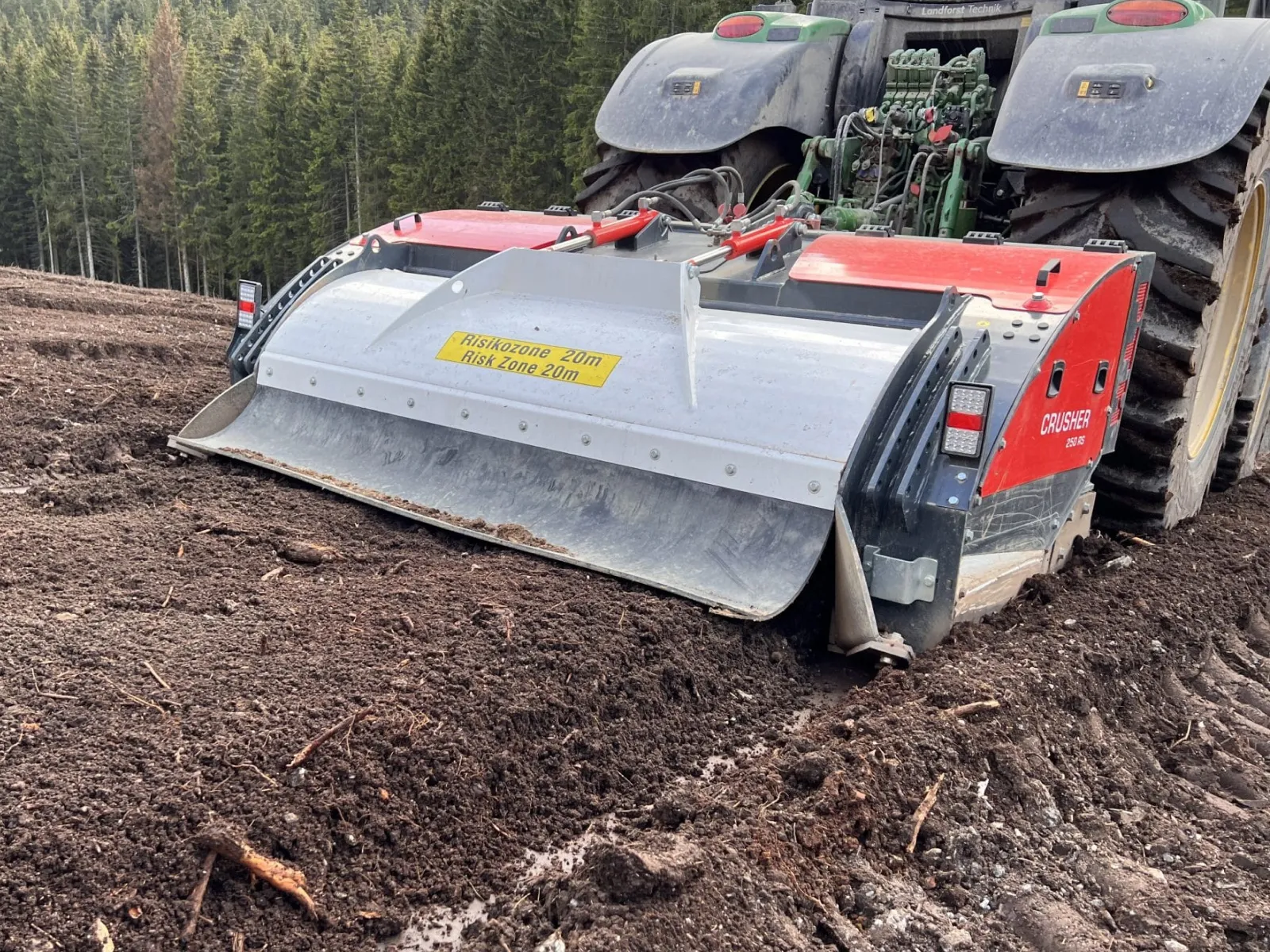
The PTH Crusher CR200 is built for continuous work in hard stone such as basalt, gneiss and granite, and in concrete and asphalt. It’s a stone crusher, not a crusher bucket: it goes on the tractor’s three-point linkage and breaks stone in the ground as the tractor drives over it, so the material stays on site with nothing to haul away.
Where it’s used
- Road building and road maintenance.
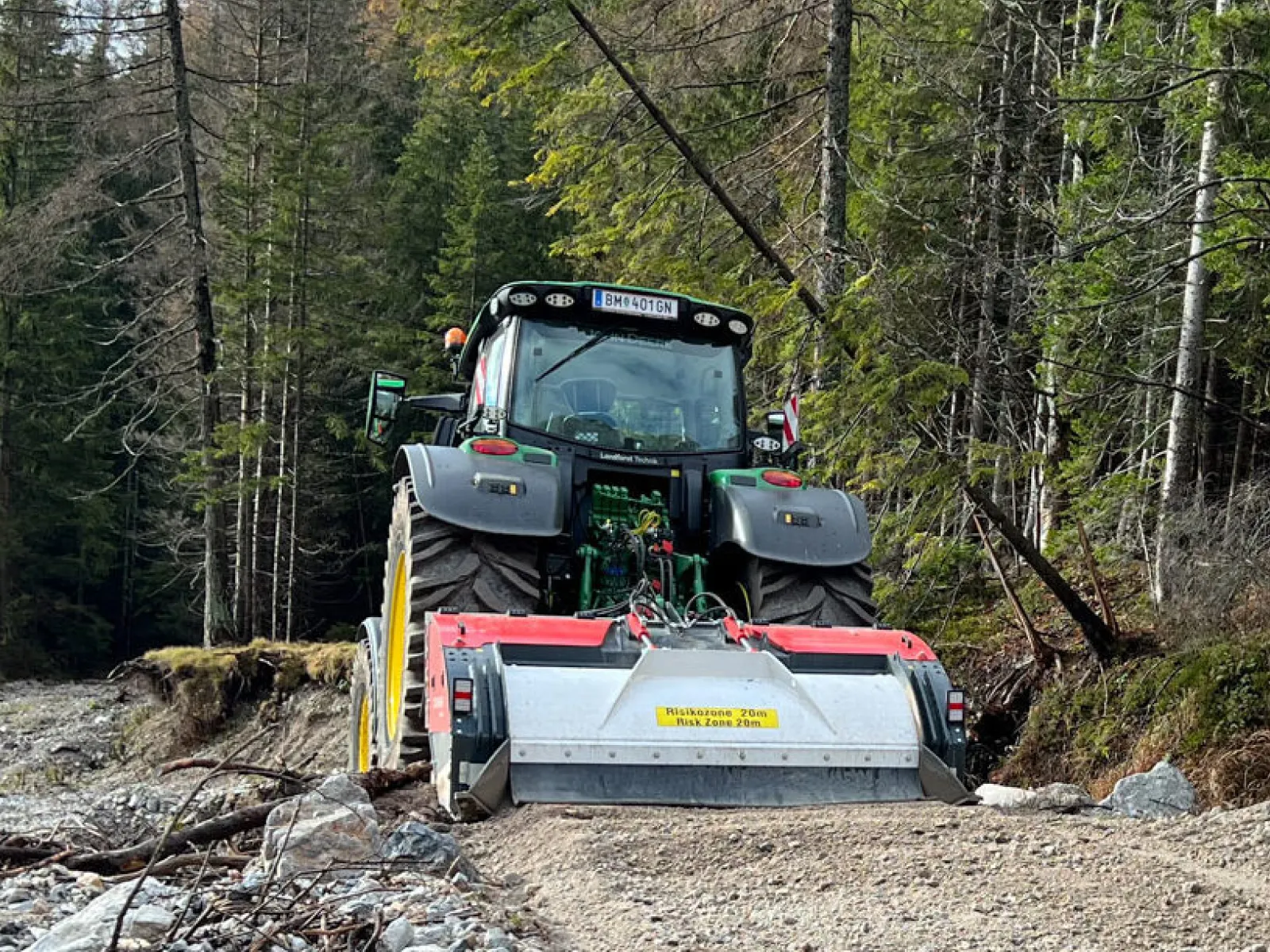
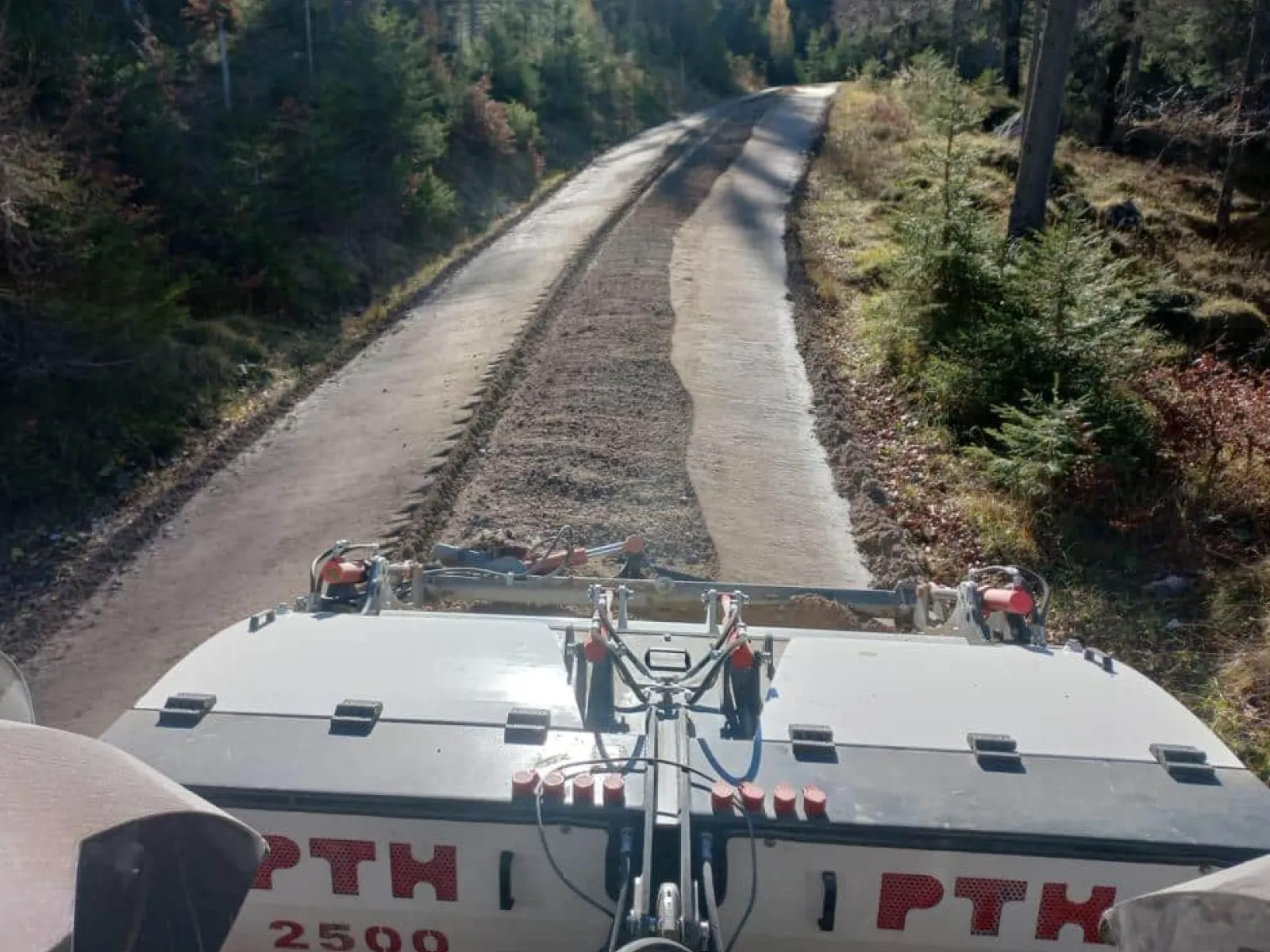
- Forest and haul roads.
- Recultivation and land reclamation.
- Processing particularly hard rock.
It suits road and path builders, construction companies, contractors and agriculture.
What it does to the rock
Depending on the equipment, it takes rock with an edge length of up to 500 mm down to a grain size as fine as 20 mm, in rock with a compressive strength of up to 150 N/mm². Depending on the model, up to three adjustable crushing stages let you fine-tune the result. It breaks the rock with counterblow bars rather than burying larger stones under fine material, as a milling machine tends to.
Construction
The crushing chamber is fully armoured in replaceable 15 mm Hardox, with special protection for the rotor and tool holders. All wear parts are bolted on, so you can change them on site and keep maintenance stops short. Five high-performance V-belts on each side drive the rotor, with a gearbox and integrated freewheel. The first crushing stage is hydraulically adjustable, the tailgate is hydraulic, and a toolbox is built in.
RS version
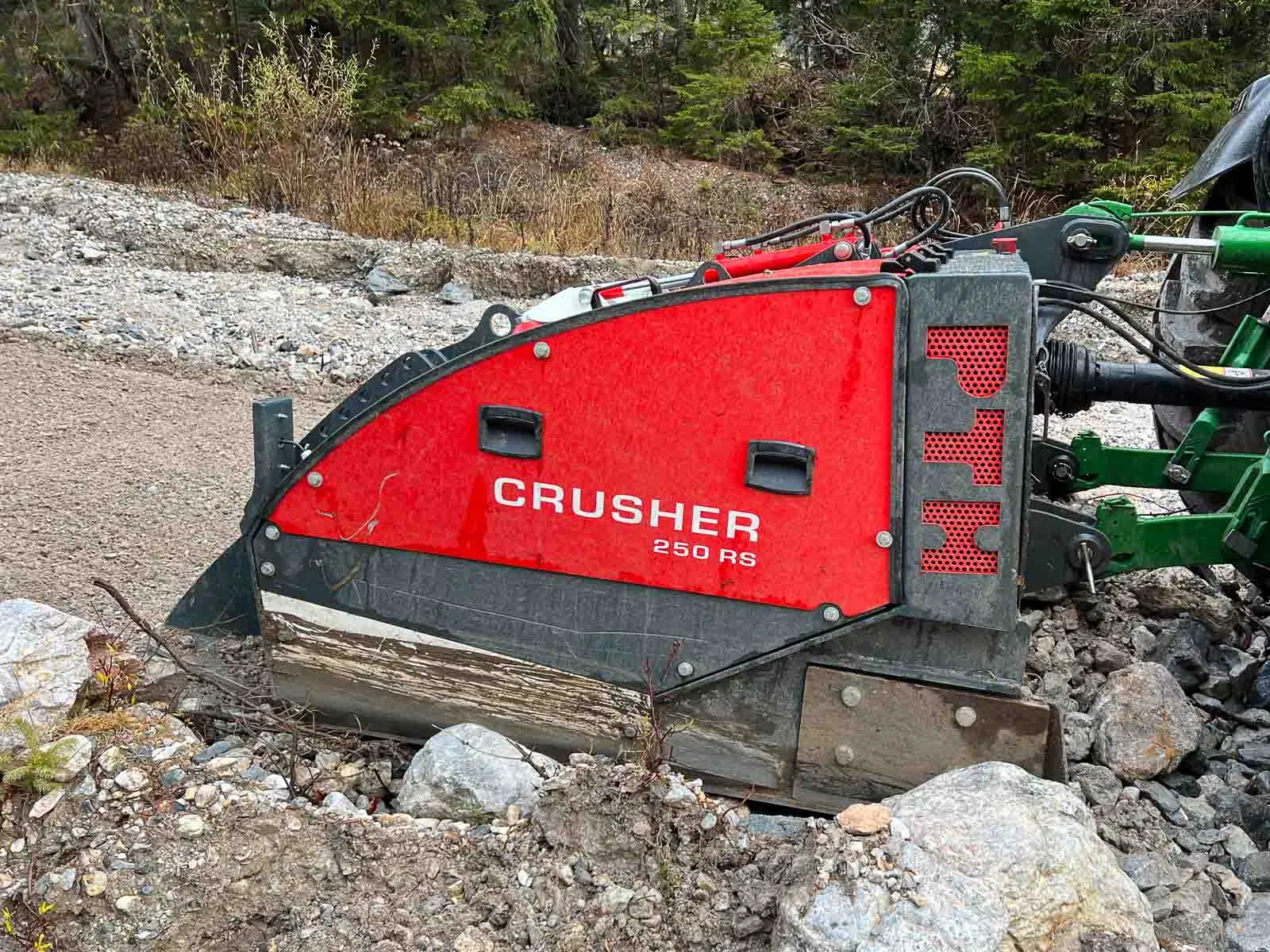
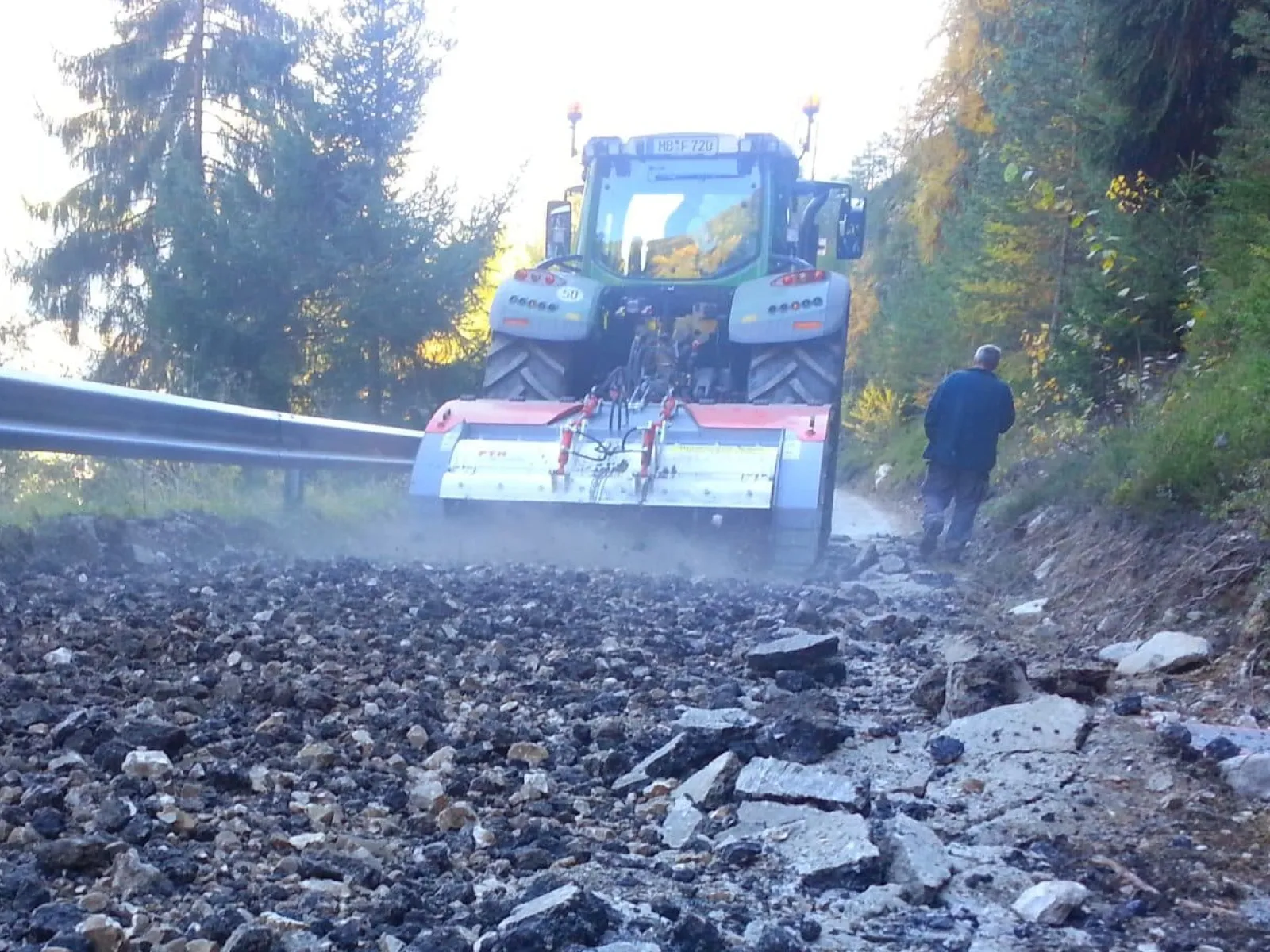
The optional RS version has a protruding rotor. Depending on the model, it mills asphalt surfaces up to 110 mm thick without ripping them first.
The road-building sequence
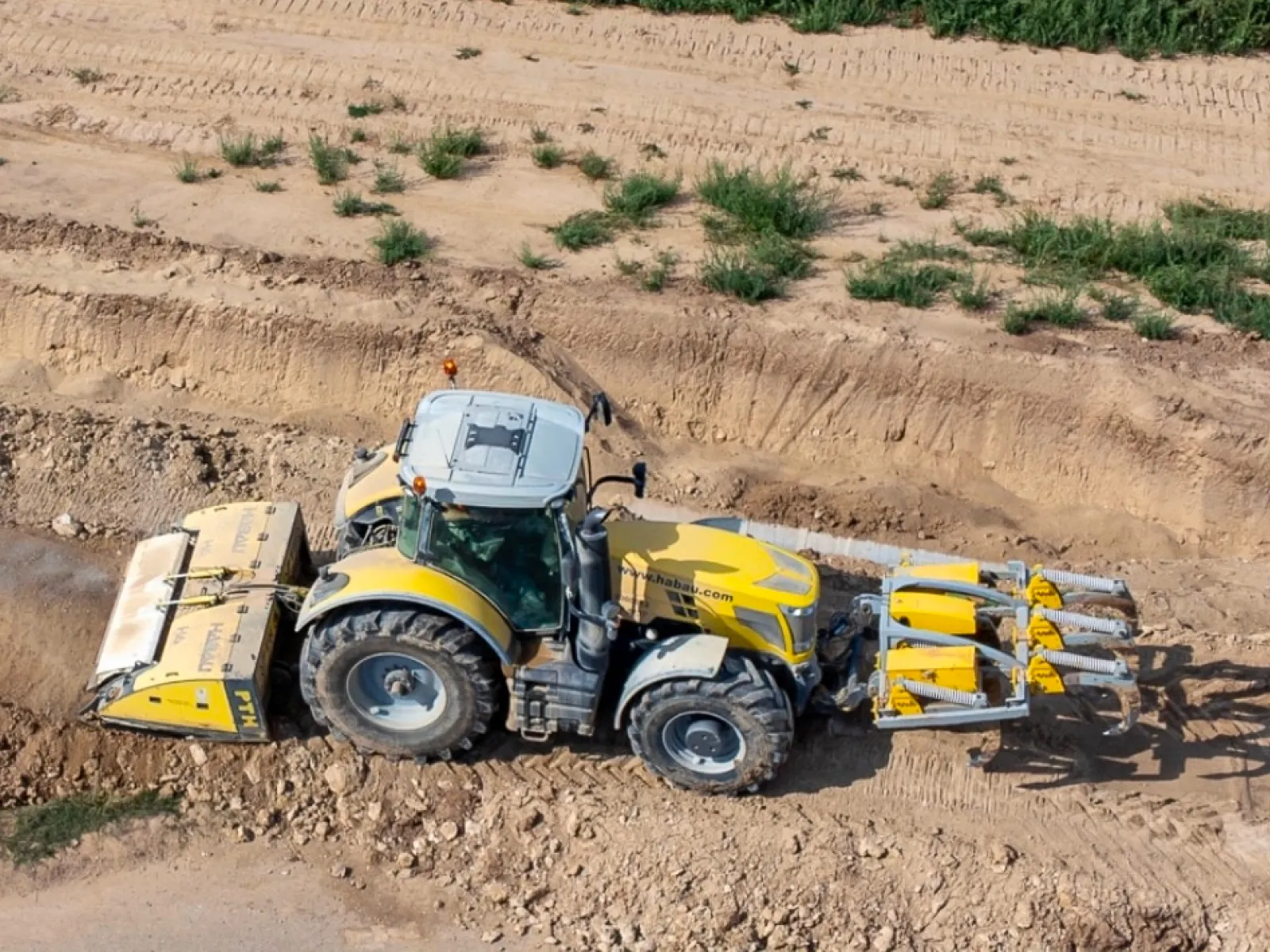
The crusher is the second of four stages in PTH’s way of rebuilding a road. The Ripper loosens compacted ground first, the crusher breaks the stone, a grader shapes the surface and the Compactor firms it.
Options
- RS version with protruding rotor
- Wear protection on the cover
- First crushing stage with 3 carbide counterblow bars
- Second crushing stage with 3 Hardox rails on the cover
- Third crushing stage with 3 Hardox rails on the cover
- Forest frame
- Hydraulically adjustable support roller
- Special rotor wear protection
- Double tools for a finer result
- Hydraulically adjustable dozer blade
- LED lighting
- Water spray nozzles
- A special RAL paint finish
How it compares
The CR200 is the lightest of the four large PTH Crushers and takes the least power. The CR250 works a 2,500 mm width with the same five belts each side. The CR2000 has the same 2,000 mm width with six belts each side and up to 350 mm of working depth. For tractors under 140 hp, PTH also makes the CR15: ask us about it.
Quick answers
Which tractors does it suit? Tractors of 140 to 220 hp, with Category 3 linkage and a PTO of 540, 750 or 1,000 rpm.
Can I buy the PTH Crusher CR200 in the UK? Yes. Exc@v8 is the sole UK importer of PTH. Use the form below or call us for pricing and availability.